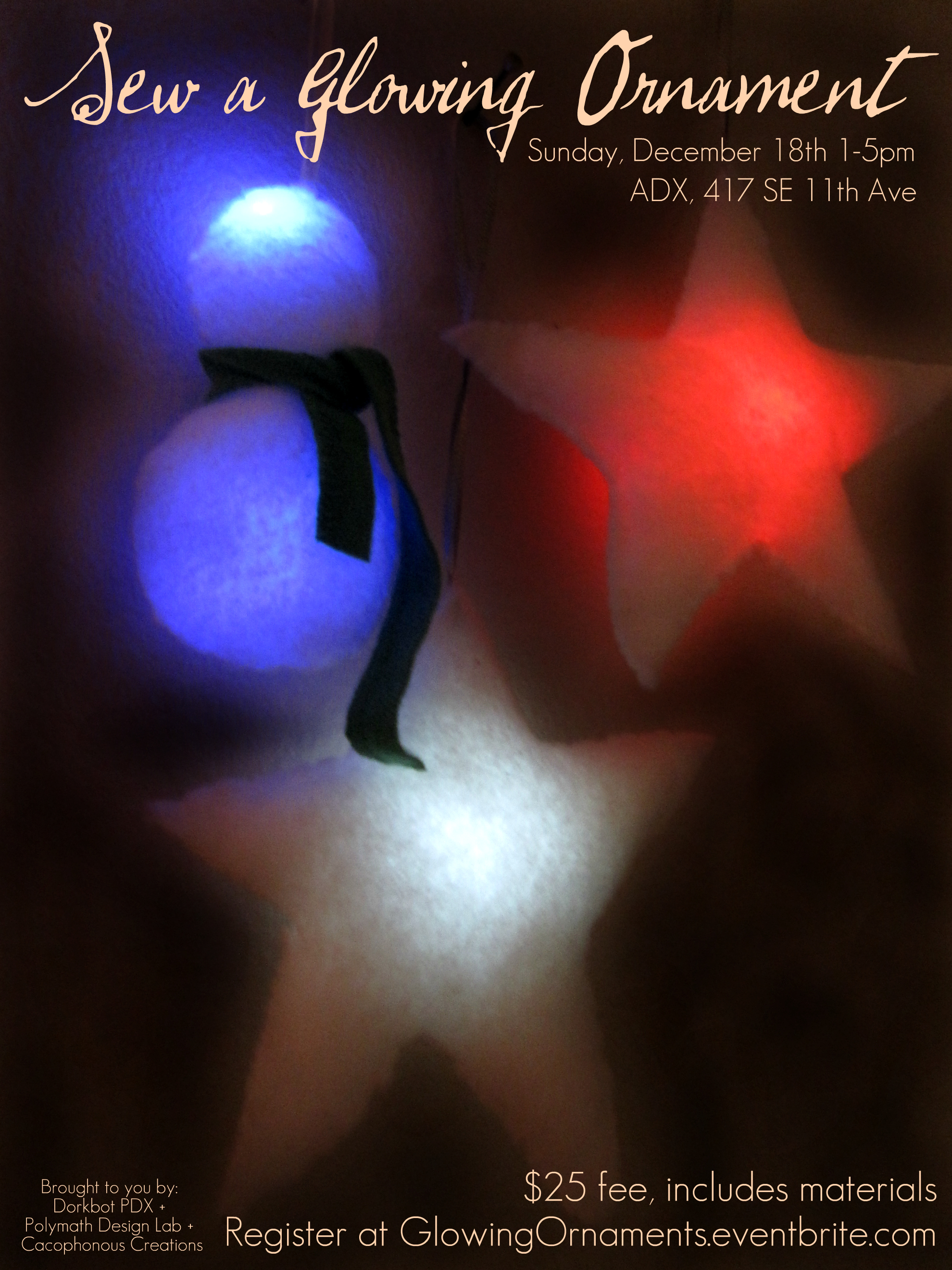
Urban Craft Uprising is coming!

June 28th, 2010

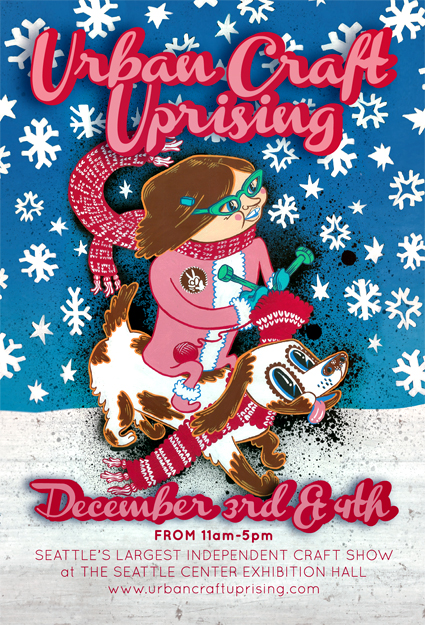
Urban Craft Uprising poster

I’m elbow deep in packing, but taking a quick break to drop by and let you know that I’ll be on the road for about 2 weeks.  As I won’t be able to ship orders out, the shop will be closed until the week of July 12th.

I’ll be capping this trip off with a visit to one of my absolute favorite craft shows – Urban Craft Uprising. If you’re in the Seattle area, I highly recommend stopping by the exhibition hall at Seattle Center on July 10th or 11th. UCU consistently has fantastic vendors, interesting demos and author visits, and just a generally great, fun vibe, so I’m thrilled to be headed back for my third show with them.

If you make it to the show, stop by my booth and say hi!

Bookmark and Share

Hopping off to the Art Hop!

May 15th, 2010

I’m getting ready to head off the the 11th Annual Alberta Art Hop this morning! Portland’s NE Alberta street will be closed to traffic from 15th to 29th most of the day, instead playing host to tons of incredible artists and crafters, food, music and dance performances, and fun. If you’re in the area, stop by and say hi!

Alberta Art Hop Ad

Bookmark and Share

Happy Ada Lovelace Day – Wearable Electronics Edition

March 24th, 2010

Ada Lovelace Day was established last year as an international day of blogging to celebrate the achievements of women in technology and science. If you’re not already familiar with Lady Ada, it’s worth learning more… The daughter of Lord Byron, she worked with Charles Babbage on his analytical engine and wrote the world’s first computer program.

Detail of1836 Painting of Ada Lovelace


In honor of Lady Ada, I’d like to highlight a handful of the women who inspire me in the world of wearable electronics and soft circuitry.

Leah Buechley

Director of the High-Low Tech research group at the MIT Media Lab, Leah developed the Lilypad Arduino – the microcontroller boards I’ve been using in my own wearable electronics experimentation. It’s a dream of mine to someday be involved with her lab – they come up with incredible, innovative, and beautiful things there!

LED Bracelet - Leah Buechley, 2005

LED Bracelet - Leah Buechley, 2005

Hannah Perner-Wilson

One of the graduate research assistants in Leah Buechley’s lab, Hannah has developed some incredible resources for others interested in wearable electronics, including the reference site HOW TO GET WHAT YOU WANT (with Mika Satomi) and a bunch of Instructables.

Knit & Crocheted Sensors - Hannah Perner-Wilson, 2009

Knit & Crocheted Sensors - Hannah Perner-Wilson, 2009

Diana Eng

You may recognize Diana’s name from her stint on Project Runway a couple of years ago. She’s still going strong with wearable technology -  most recently authoring Fashion Geek and creating Fairytale Fashion, a collection with electronics and shape-changing garments which integrated feedback from the public through her website during the design process. For extra geek points, she also covers ham radio for Make magazine!

Twinkle Dress and EL Wire Dress - Diana Eng, 2010

Twinkle Dress and EL Wire Dress - Diana Eng, 2010

Syuzi Pakhchyan

Syuzi wrote Fashioning Technology, the first book that I picked up on the subject of soft circuitry, and runs a community by the same name. Syuzi is great about encouraging more people to experiment in the field – the Fashioning Tech community is very welcoming, and she regularly shares the projects that members blog about there.

ePuppets - Syuzi Pakhchyan, 2008

ePuppets - Syuzi Pakhchyan, 2008

Alison Lewis

Alison is the founder of SWITCH and author of SwitchCraft. She also teaches at the Parsons School of Design, and brings a more high-fashion perspective to her work. I was incredibly flattered when she recently featured my Skirt Full of Stars on SWITCH.

Rodarte-style Lighted Heels - Alison Lewis, 2010

Rodarte-style Lighted Heels - Alison Lewis, 2010

Becky Stern

Becky may have done more to spread the word of DIY soft circuitry than anyone else. As Associate Editor at MAKE and CRAFT, she frequently shares wearable tech projects and has produced a couple of CRAFT videos about wearables. She also teaches soft circuit workshops (I had to miss the one at Urban Craft Uprising in Seattle last summer because I didn’t have anyone else working my booth), and sells soft circuit starter kits through her company, Sternlab.

Lilypad Embroidery - Becky Stern, 2008

Lilypad Embroidery - Becky Stern, 2008

Lynne Bruning

‘Textile Enchantress’ Lynne makes absolutely stunning garments that frequently involve things like electronics or UV-reactive materials. She has also generously shared quite a few instructables of soft circuitry techniques. I’m particularly fascinated by the work she’s been doing using smart fashion to assist impaired individuals – like this sonar garment for the visually impaired.

Bats Have Feelings Too - Lynne Bruning, 2009

Bats Have Feelings Too - Lynne Bruning, 2009

Angela Sheehan

Creator of the blog Soft Circuit Saturdays, Angela is another maker who has been diving deeply into wearable electronics. I love seeing what another dedicated explorer who is not a professional in the field comes up with!

Temperature Sensing Cup Sleeve - Angela Sheehan, 2009

Temperature Sensing Cup Sleeve - Angela Sheehan, 2009

Interested in seeing more posts honoring women in science and tech? Check out the list of posts over at Finding Ada, or follow the #ald10 tag on twitter.

Bookmark and Share

Illuminated, Interactive ‘Skirt Full of Stars’ – Part 2

February 25th, 2010

Update: A tutorial with instructions to make your own Skirt Full of Stars is now posted at StarSkirt.PolymathDesignLab.com

Now you can see the Skirt Full of Stars in action!

In case you haven’t seen my last post about it, this is a hand-sewn tulle wrap skirt with integrated fiber optics and lights that change color in response to the speed and direction of the wearer’s movement.

It uses the Lilypad Arduino platform, developed for integrating electronics into textiles. There’s a purple organza underlayer to the skirt onto which is sewn the Lilypad main circuit board and a power supply, and an accelerometer hangs from a ribbon to allow for freedom of movement. The Lilypad receives the measurements of the accelerometer’s movement, and translates them into color output for the tricolor LEDs around the waistband of the skirt.

I used sparkle fiber optic cable to cut the harsh quality that you can get when using LEDs and distribute the light more evenly throughout the skirt. In previous prototypes I had simply created a line of LEDs swirling around the skirt, and this makes for a far more subtle and wearable effect.

I have to say, getting decent video of this skirt was quite a challenge! Too much light and the fiber optics didn’t show up on camera, too little and nothing showed up at all. Even this isn’t an accurate representation of what it looks like in person – the camera mostly just picks up the points of light from fiber optics pointed directly at it, where in person you can see them all around the skirt. But hopefully it at least gives a decent idea of how the whole thing works…

Want your own?

It looks like I’ll be making another of these soon, so I plan to take more photos of the construction process and post the instructions here as I go.

If you’re not feeling the yearning to jump into making wearable electronics yourself but you still want your own, send me an email at shannon@polymathdesignlab.com. I had a lot of fun creating this and would be thrilled to make some as custom projects.

Skirt full of stars

Bookmark and Share

Bits and Bobs

February 16th, 2010

There was no video-taking in the Henry household this weekend, so my skirt followup will have to wait a bit.  In the meantime, here are a couple of things I’ve been keeping around in google reader to share here:

Oxygen emission spectrum scarf by bekathwia

I really like these Emission Spectra scarves from Becky Stern. I’ve actually been kicking around an emission spectrum bracelet idea for about six months now, but the picture I have in my head requires metalworking skills and tools I don’t have. Seeing this makes me want to revisit the idea, though, and try to find another means of interpreting it.

I was also really intrigued by the ideas from Fabian Hemmert’s TEDx talk on ways a mobile device could provide information kinesthetically. I’m not so sure I’d want a “breathing” mobile, but changing the center of mass seems like it could be a really useful way of providing output. (via information aesthetics)

Misfortune Cookies by notsohumblepie.blogspot.com

I just discovered Not So Humble Pie, who came up with these fabulous misfortune cookies. She also recently did a couple of awesome science cookie roundups.

N Building

N Building, in Tokyo, is a concept building with an interesting augmented reality twist. Instead of putting up signs, the building facade is a QR code; reading it on a mobile device delivers you to a website with a tenant list and other information.The developers also created an iPhone application that allows building occupants to interact with passersby through their phones -- showing what’s behind the windows, overlaying speech bubbles, and the like. (via Rhizome)

I can’t imagine anything like this taking off if every building had its own separate app, but I could definitely envision it integrated into a product like Google Maps.

Bookmark and Share